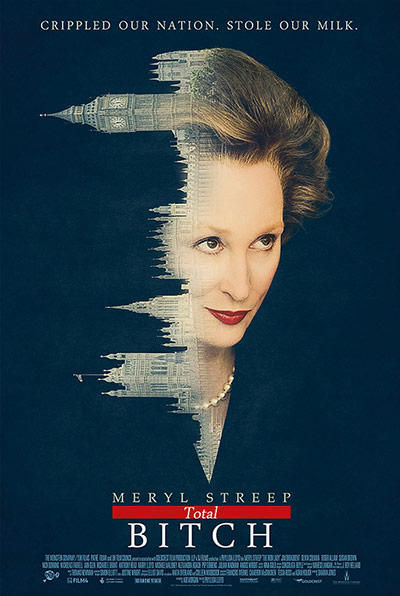
I really need to stop catching up on so many TV shows and get back to movies...
but first more Spaced!
Tuesday, February 21, 2012
A Dangerous Method
I didn't know what to expect when going into see A Dangerous Method. The collaboration is such a eclectic fusion of talent. At the helm there is director David Cronenberg, renowned for his visceral films that veer into the horror genre. Then we have Viggo Mortensen and Michael Fassbender, two actors who come from the school of method. Then the limp noodle of the bunch, I have to be honest, was the mention of Kiera Knigthtley. Though a previous Oscar nominee, Knightley has never astounded or transfixed on screen, she works with what she has but had so far demonstrated little range.
Now back to the plot, the gloriously tense plot. It begins at the dawn of psychoanalysis, focusing primarily on Carl Jung (Fassbender), his observations, opinions, and relationship with Sigmund Freud (Mortensen, who soaks up the screen with a measured but relaxed turn as the original shrink).
Freud takes a shine to the younger, less experienced Dr. Jung, taking him under his wing as they delve into the uncharted field of psychoanalysis.
When Jung takes on the case of Sabina Spielrein (Knighley) the Jung and Freud dream team is thrown into jeopardy. Spielrein is, for all intents and purposes, the guinea pig of the operation. Spielrein's condition conforms to Freud's theories of sexual repression being central to the experience of psychological anxiety. Jung resists this notion, though this resistance may stem from denial for when he embarks on an affair with Spielrein his own repressive habits are highlighted, and he would prefer to develop a psychological study that is not so centralised in the realm of sexuality.
First of all, my problem with this film is how it was advertised. Sure, lunacy and spanking are part of the story, but only initially. The trailer makes it out to be a fetishistic, psycho-orgy. To me Cronenberg is more interested in looking at the tensions evolving between Jung and Freud as psychoanalysis develops. The tension, the diverging opinions, the father-son, possibly underlined sexual attraction between the two. (Who knows though, maybe I'm just taking Freudian theme and getting ahead of myself).
Spielrein is the foil and catalyst by which the cogs turn in the movie, which is why I was (shockingly) impressed with Knightley's performance. She did hysteria without being caricature, she has mastered the physical tics and bulging eyes thus denoting that paranoid fear that comes out of repressed anxieties. These all sound a little stereotypical sure, but she does this in such a subtle way, contradictory I know, a lunatic being subtle. Maybe it's because my past opinions of Knigthley veer on the side of can't stand, this was almost poetic.
A must see for performances alone. I have heard others say the story line lagged, or something to that effect, but the slow, defined unfold of the plot reflect the tension between the three leads as well as underlining the conservatism of the society they were a part of. Radical thinking such as their's wouldn't have been accepted overnight.
Thursday, February 9, 2012
Murder She Will Write
My sister asked me to find mom's old typewriter and all I could think about was this.
Spaced
The soundtrack in Spaced makes me feel spaced.
ahhhh *edit
forgot about THAT
(#REWATCHING SPACED)
ahhhh *edit
forgot about THAT
(#REWATCHING SPACED)
The Descendants
Although it would be nice for the Academy to get over their George Clooney-love in, The Descendants trailer was undeniably appealing. It looked invigorating, spiritual, a perfect anecdote to the gloomy shroud that consumes you during winter.
(Will not be held accountable to adverse affects experienced from lusting after Hawaiin climate...)
The film marks also the return of Alexander Payne, last heard from with Sideways.
The film opens with a brief shot of a woman on what appears to be a jet ski, what is compelling about this scene is her expression, one marked be utter contentment. The fade to black is ominous. We soon learn that that woman was Elizabeth King, now in a coma, a wife to successful and frugal lawyer Matt King, who is diligently working by her hospital bed in the establishing shot where he narratives a brief summary of life and up to there.
The coma acts as a catalyst which through Matt's otherwise comfortably uneventful life is thrown into disarray where he must acknowledge things and take action. He is forced to commit to parenting for the first time in his life, referring to himself as the back-up parent. His unruly seventeen year old Alexandra, played by the unexpectedly sublime Shailene Woodley, and petulant Scottie are independent forces to be reckoned with.
He learns his wife was cheating on him and planning to leave him. While this sets things in motion for the journey of the film, the trailer makes it seem like this is what the film centers on. Wrong.
Matt's entire journey seems to be summed up in the allegory of the land. He is the named trustee to a large acreage of land, and he and his cousins are in the process of figuring out who to sell the land to.
Because the subplot of land, (woah careful now, I am making this sound like a sequel to The Field) Hawaii predictably becomes a character in and of itself in the film. It clearly has a profound effect in rebuilding the relationship between Matt and his daughters, and helping them through their grief and anger experienced in the aftermath of their mother's accident.
This would be my only gripe about the film. Its predictability. It does not shy away from cliche or sentiment, which is probably a result of the source material, the novel by Kaui Hart Hemmings. While it is far from a run of the mill chick flick, there is almost a paint-by-numbers characters progression but this has thankfully been peppered with enough Alexander Payne flair to rescue it and brings it to life.
It's a genuinely funny piece. It combines many levels of humour without going overboard, we get a little bit of physical comedy, thanks to out of shape Matt's jog in flip flops down a spiraling Hawaiian suburban hill. There's a little bit of stoner exploitation, courtesy of Sid, (Nick Krausse), Alexandra's inexplicably present boyfriend. The caper quality, perhaps a nod to Clooney's Ocean Series, bestows the film with an adventurousness that involves the audience, giving a emotional connection. You will root for this family as they scour the beaches in search of the adulterous mother's partner. Also the Hawaiian uniform provides a good ole laugh, probably unintentional.
Clooney is obviously promoted as the face of the movie as he's a big box office draw, but the way each character is drawn in this story is genius. Each character is given such dimension. Even Brian Speer (Matthew Lillard), the man whom Matt's wife was in love with, is likable because his vulnerability is shown. So even though the movie itself delves into cliche, the characterizations and actual performances strengthen any weaknesses.
Even though I was hyper aware of the cliche, blame my English course in film for making me so judgmental, the film still manipulated an emotional response out of me. Because what is shown in The Descendants is truth in many ways. It does not dwell on the "why me"s, but simply shows these people dealing with everyday life even though their world has utterly changed.
Cliche is cliche for a reason, even though we think we are all individual, we all invariably go through similar experiences of pain, beauty, happiness, and grief. The Descendants is actually a very refreshing take on that, not unearthing shattering, but thank Hawaii. And Alexander Payne.
Wednesday, February 8, 2012
Shopping the Film Stash #3 - Frankenstein (1994)
So how grossed out were you when Frankenstein was covered in amniotic fluid?
Overall I think this film was unintentionally hilarious.
Good day!
Monday, February 6, 2012
The Ignored
While the Oscars, in the long run, do and should not affect the quality of a film, the awards show and a nomination sure as hell invigorates the life of the film and actors and manipulates the public's own perception of a film.
Let us take George Clooney for instance. Who really took him seriously before he won for Syrianna and was nominated for Good Night, and Good Luck? He was ER star who transitioned fairly seamlessly to film, but was primarily known for his roles as a playboy-esque, cheeky chappy. He started working with the right people however, the Cohen Brothers, Steven Soderbergh... and has since possessed a glistening Academy Award sheen. He can literally do no wrong, and even though as an actor he is flat and little bit of a one trick pony in terms of depth of character, he has for the last few years pretty much been a permanent fixture throughout awards season.
Sure he doesn't really deserve to be there, but is there, and is being acknowledged, like so many other "meh" performances. Not that are really and truly meh, and not that I really have a problem with Clooney, but Awards season has become achingly predictable. Every show basically has the same list of nominations.
(On a side note, who would have thought such a mediocre novel such as The Help would have inspired such a passionate response for its filmic version? Either that or voters are afraid it would have been prejudice not to include it.)
While my distance from a cinema has sadly hindered my access to most of the nominated lot this year, there are a few glaring omissions that I would love to briefly discuss.
Melancholia
more in-depth review here
Maybe I am alone here, after all it received only average ratings, from the likes of Total Film and Empire, from what I can tell, but I felt Melancholia was the "revelation" moment of cinema in 2011. In a society so bruised by economic strain, a possible impending apocalypse, and in a planet where depression is still discussed in hushed voices, Melancholia was unafraid to tackle the everyday strain of existence and expand it into a feature length masterpiece.
Lars von Trier has more than likely been permanently shunned by Hollywood after his bizarre Nazi comments in Cannes, but what a shame that the film and actors anchoring the project have been ignored also.
Kirsten Dunst and Charlotte Gainsbourg achieve something so very rare in film, they deliver muted suffering that speaks volumes more than hysteria. There are intricacies of gesture, expression, and hesitation that is magnified by hand-held camera motion.
Performances such as these always impress me more than a portrayal of a real-life character. Not that Meryl Streep's performance as Margaret Thatcher wasn't amazing and powerful, it was. But to bring to life a character so vividly from its foundations in the two-dimensional space of screenplay is something really worth speaking of.
Super 8
Yes it was a summer blockbuster. Yes it was sentimental. And YES it was a Spielberg pastiche if ever I saw one, but those are also the reasons I adored this film! I can guarantee it will just bring you right back to when you were a kid, when you first started watching films, and were in awe of the very medium you were witnessing. It is the Cinema Paradiso for the 21st century. And yes, I am aware that was released merely twenty odd years ago....
The storyline was a little cliche, but a lot of films are cliched. Super 8 just reawakened the soul! I can barely describe this probably I just simply urge you to see this. It gave children a voice beyond the wacky, cheeky, snide cartoonish renderings we have been seeing in the past decade and it was showed the parents and children can be vulnerable as well as brave.
It was the perfect anecdote to the summer/thesis blues. I have not seen Hugo, so I guess I am being completely bias, but Hugo looks so extravagant, I am all for the blue collar underdog which is what you will find with JJ Abrahams pet project. And Hugo was 3D. Eugh.
Where is the best original screenplay? And WHERE is Elle Fanning's recognition?
The Guard
Maybe this movie didn't travel well. It is extremely colloquial, and to weaker disposition, probably offensive. Besides comedies rarely capture the Academy's attention as well as a good weepy.
But wait. Melissa McCarthy, nominated. Maybe there will be hope for Brendan! Nooo.
Yeah I have a love hate relationship with Bridesmaids. It was funny, sure. I laughed, yes. Those girls were funny, yes. But I would not return to this film. There's nothing there beyond a single viewing. The only revolutionary thing about it is that is starred and was written by women. Women writers have been around a long while and have been doing just fine for themselves.
The comedy was gross out comedy with girls. Not terribly engaging, sorry to have to say. It was funny in a kneejerk, slapstick kind of way but on repeated watch the lustre will fade. McCarthy was brilliant because it was a unabashed physical and comedic performance, but it was like her antics was carrying the film.
Gleeson, on the other hand.
I know they say Ireland, the Irish, carries a beautiful duality of humour and melancholy and this is what Gerry encapsulates. Just when you think he is one dimensional thuggish cop, you see him with his mother. He is humanised. He has woes, and faults, and he is real.
50/50
Yeah I've spoken about this before too so I promise I really won't bore you with this one, but let us just say it has been robbed everywhere by all accounts. Bryce Dallas Howard for being a heartless bitch in the face of cancer. Seth Rogen for being the obnoxious but lovable and caring friend. Joseph Gordan Levitt, for enlivening a character who is suffering but who refuses to go down the route of caricature, where the bucket lists reside. It is relatable, and endearing, and Angelica Huston remains a force to be reckoned with.
We Need to Talk About Kevin
Terrifying and challenging to watch. Yet refreshing to see a portrayal of a mother who find it hard to unearth the patience to rear or even love her son. She's a woman tormented by unfulfilled aspirations, and barely hides the fact that she blames her son for her stilted life. Then there is Kevin. Damien incarnate. Not so much evil as seeking his mother's love. A film calling attention to the fact that we are all products of our environment.
Tilda Swinton and Ezra Miller have suffered a grave injustice.
I literally think my favourite thing about film in 2011 is when filmmakers and actors just went for a more pared down version of a film character, and situated you in a more realistic space and life. Relatability is a very attractive thing in cinema. Don't forget this Film of 2012.
Let us take George Clooney for instance. Who really took him seriously before he won for Syrianna and was nominated for Good Night, and Good Luck? He was ER star who transitioned fairly seamlessly to film, but was primarily known for his roles as a playboy-esque, cheeky chappy. He started working with the right people however, the Cohen Brothers, Steven Soderbergh... and has since possessed a glistening Academy Award sheen. He can literally do no wrong, and even though as an actor he is flat and little bit of a one trick pony in terms of depth of character, he has for the last few years pretty much been a permanent fixture throughout awards season.
Sure he doesn't really deserve to be there, but is there, and is being acknowledged, like so many other "meh" performances. Not that are really and truly meh, and not that I really have a problem with Clooney, but Awards season has become achingly predictable. Every show basically has the same list of nominations.
(On a side note, who would have thought such a mediocre novel such as The Help would have inspired such a passionate response for its filmic version? Either that or voters are afraid it would have been prejudice not to include it.)
While my distance from a cinema has sadly hindered my access to most of the nominated lot this year, there are a few glaring omissions that I would love to briefly discuss.
Melancholia
more in-depth review here
Maybe I am alone here, after all it received only average ratings, from the likes of Total Film and Empire, from what I can tell, but I felt Melancholia was the "revelation" moment of cinema in 2011. In a society so bruised by economic strain, a possible impending apocalypse, and in a planet where depression is still discussed in hushed voices, Melancholia was unafraid to tackle the everyday strain of existence and expand it into a feature length masterpiece.
Lars von Trier has more than likely been permanently shunned by Hollywood after his bizarre Nazi comments in Cannes, but what a shame that the film and actors anchoring the project have been ignored also.
Kirsten Dunst and Charlotte Gainsbourg achieve something so very rare in film, they deliver muted suffering that speaks volumes more than hysteria. There are intricacies of gesture, expression, and hesitation that is magnified by hand-held camera motion.
Performances such as these always impress me more than a portrayal of a real-life character. Not that Meryl Streep's performance as Margaret Thatcher wasn't amazing and powerful, it was. But to bring to life a character so vividly from its foundations in the two-dimensional space of screenplay is something really worth speaking of.
Super 8
Yes it was a summer blockbuster. Yes it was sentimental. And YES it was a Spielberg pastiche if ever I saw one, but those are also the reasons I adored this film! I can guarantee it will just bring you right back to when you were a kid, when you first started watching films, and were in awe of the very medium you were witnessing. It is the Cinema Paradiso for the 21st century. And yes, I am aware that was released merely twenty odd years ago....
The storyline was a little cliche, but a lot of films are cliched. Super 8 just reawakened the soul! I can barely describe this probably I just simply urge you to see this. It gave children a voice beyond the wacky, cheeky, snide cartoonish renderings we have been seeing in the past decade and it was showed the parents and children can be vulnerable as well as brave.
It was the perfect anecdote to the summer/thesis blues. I have not seen Hugo, so I guess I am being completely bias, but Hugo looks so extravagant, I am all for the blue collar underdog which is what you will find with JJ Abrahams pet project. And Hugo was 3D. Eugh.
Where is the best original screenplay? And WHERE is Elle Fanning's recognition?
The Guard
Maybe this movie didn't travel well. It is extremely colloquial, and to weaker disposition, probably offensive. Besides comedies rarely capture the Academy's attention as well as a good weepy.
But wait. Melissa McCarthy, nominated. Maybe there will be hope for Brendan! Nooo.
Yeah I have a love hate relationship with Bridesmaids. It was funny, sure. I laughed, yes. Those girls were funny, yes. But I would not return to this film. There's nothing there beyond a single viewing. The only revolutionary thing about it is that is starred and was written by women. Women writers have been around a long while and have been doing just fine for themselves.
The comedy was gross out comedy with girls. Not terribly engaging, sorry to have to say. It was funny in a kneejerk, slapstick kind of way but on repeated watch the lustre will fade. McCarthy was brilliant because it was a unabashed physical and comedic performance, but it was like her antics was carrying the film.
Gleeson, on the other hand.
I know they say Ireland, the Irish, carries a beautiful duality of humour and melancholy and this is what Gerry encapsulates. Just when you think he is one dimensional thuggish cop, you see him with his mother. He is humanised. He has woes, and faults, and he is real.
50/50
Yeah I've spoken about this before too so I promise I really won't bore you with this one, but let us just say it has been robbed everywhere by all accounts. Bryce Dallas Howard for being a heartless bitch in the face of cancer. Seth Rogen for being the obnoxious but lovable and caring friend. Joseph Gordan Levitt, for enlivening a character who is suffering but who refuses to go down the route of caricature, where the bucket lists reside. It is relatable, and endearing, and Angelica Huston remains a force to be reckoned with.
We Need to Talk About Kevin
Terrifying and challenging to watch. Yet refreshing to see a portrayal of a mother who find it hard to unearth the patience to rear or even love her son. She's a woman tormented by unfulfilled aspirations, and barely hides the fact that she blames her son for her stilted life. Then there is Kevin. Damien incarnate. Not so much evil as seeking his mother's love. A film calling attention to the fact that we are all products of our environment.
Tilda Swinton and Ezra Miller have suffered a grave injustice.
------------------
Sunday, February 5, 2012
Currently Reading...
So far, a tough read, Lou's inner voice is very convoluted. You feel like an accessory to the crime just by being privy to his thoughts.
Shopping the Film Stash #2 - Drive
Wikipedia, I know, not the most illustrious source, describes Nicolas Winding Refn's Drive as an arthouse action drama film. I say it is more like the arthouse version of watching paint dry.
I was a latecomer to this film, which came out last September if I am not wrong.
It received huge plaudits at Cannes, and most critics fell over themselves with love for this, but at the time I had little acces/funds to see it in the cinema, so put it on the back burner. I went retro the other day and rented it out at a local DVD shop.
Now it is not that I was disappointed with the movie, all the elements are there. The cinematography is unbelievable, the performances are fantastic, bar may I saw the leads, the soundtrack is all kinds of amazing, the script is even decent, but combined it feels like it knows its good and it is the smug self-assurance that throws me off.
Drive rested on its laurels as simply being a beautiful film. Even the smearing of violence lacked the capacity to be thought provoking. Ryan Gosling's Kid, or Driver, was underdeveloped. Though this mute hero has become something of a cult obsession now, some people like the way we are literally dropped randomly into his story, and he of all people gives no clue to who or why he is. His motivation is undefined, thereby the romance between him and Irene seems completely implausible.
I am still undecided as to whether Gosling is overhyped in general or underused in this film....
Due to the lack of emotional depth, and therefore empathy, the characters are decidedly bland, and when characters are bland everything else is washed out and dull.
Albert Brooks, who got a lot of Awards buzz, but no cake, does light up the screen in a way. It is fun to see him play against type as a thug. He at least creates a ripple in another wise still ocean.
I am obviously missing something, but all I really took away from this was the killer soundtrack along with the honourable cinematic homages, (cheap pastiche?), to Taxi Driver and Bullit.
Driver will never be McQueen.
I was a latecomer to this film, which came out last September if I am not wrong.
It received huge plaudits at Cannes, and most critics fell over themselves with love for this, but at the time I had little acces/funds to see it in the cinema, so put it on the back burner. I went retro the other day and rented it out at a local DVD shop.
Now it is not that I was disappointed with the movie, all the elements are there. The cinematography is unbelievable, the performances are fantastic, bar may I saw the leads, the soundtrack is all kinds of amazing, the script is even decent, but combined it feels like it knows its good and it is the smug self-assurance that throws me off.
| I just don't understand |
I am still undecided as to whether Gosling is overhyped in general or underused in this film....
Due to the lack of emotional depth, and therefore empathy, the characters are decidedly bland, and when characters are bland everything else is washed out and dull.
Albert Brooks, who got a lot of Awards buzz, but no cake, does light up the screen in a way. It is fun to see him play against type as a thug. He at least creates a ripple in another wise still ocean.
I am obviously missing something, but all I really took away from this was the killer soundtrack along with the honourable cinematic homages, (cheap pastiche?), to Taxi Driver and Bullit.
Driver will never be McQueen.
Shopping the Film Stash #1 - Heathers
As I now live two hours from a decent cinema that offers variety and limited release choices, I have been both gathering and diving into the DVD archives. I have found myself creating a list as long as my harm, a bucket list of films to see, to study, to learn. Directors, script-writers, and actors constantly site various source material when speaking of their craft, and throughout the last year while writing my thesis and pouring over various film reviews I have learnt that a film critic is no different. The annals of film is a critic's bible when writing an objective review.
So to train my amateur writing hand a little better I am setting out on a little exercise and visiting some cult classics, films that have come to my attention over the last year but have so far been somehow neglected, and perhaps even some oldies that I love!
All in the hopes of extending my film vocabulary....
Heathers (1989)
I remember seeing Mean Girls in the cinema thinking it was refreshingly different from the other teen comedies that had been circulating around that era (the era I speak of is that Golden Age of Millenia-teen films, 10 Things I Hate About You, Down To You, She's All That, but to name a few, I guess Mean Girls was a few years after, but you get my drift). Mean Girls came along and set about debunking the romantic notions of teenage-hood, and decided to shed some light on the harsh realities of High School. There was less, I stress less, of a focus on the girl-likes-boy dilemma while the examination of the fickle foundations of female friendships really takes center stage.
Though Tina Fey's originality and wit are boundless, Mean Girls, its plot, and characters owe everything to Heathers. Heathers is a far superior, satirical, more sinister commentary on the tenuous years of High School. It villainises these characters, giving them unprecedented power, the exaggerated (but not altogether unimaginable) murder plot parodying the usual hormonal deviations of an American teen.
Veronica, the oft under-appreciated Winona Ryder, is a girl who is not named Heather but who has been given divine access to the elite Heathers clique, for reasons unknown. At first she feels privileged to be included and is even enthralled by the warped superiority of the malevolent lead Heather. She is enamoured by Heather's philosophies, that in fact justify her tyrannical ways, "Dear Diary, Heather told me she teaches people real life." The film is full of gems like this, Fey wishes she could be this raunchy and self-assured in her writing. Heather 1 is like a cacophony of teenage-hood and adulthood, she is self-possessed, relishing her youth yet outgrown the anxieties of her peers. She is acutely aware of her surroundings, so much so that she has created her own glossary, according to her authority, "very" marks a seal of coveted approval, Heather desires very, because she desires excess and vitality.
She blithely critiques the stereotypes of youth, and condemns her followers for falling victim, "Grow up Heather, bulimia is so '87." Still inevitably lacking sympathy, Heather's independence is what makes her both enviable and caustic.
She eventually tethers nerves, leading Veronica to naively succumbs to her new boyfriend's scheme to throttle the queen bitches, after unwittingly becoming an accessory in Jason's murder plot, when Heather 1 ingests her poisonous end.
Christian Slater plays Jason Dean, and though in Jack Nicholson's psychosis The Shining mode, when clothed in leather jacket and straddling a motorbike he personifies James Dean 2.0. He is an 80s incarnation, the upper-class rebel without a cause who sets about invigorating a spirit into an era that lacked the rebellious attitude that drenched the Hippie 60s and 70s punks.
Though murder and mayhem landmark her journey, Veronica is actually an admirable character, even somewhat a feminine role model. She takes a stand, an intense one, against bullying. And though they are the MTV generation's Bonnie and Clyde, when she realises that she has descended into psychotic territory with her boyfriend she transcends this too. She evolves beyond the suburbia complex, the vacuous pandering of unmitigated angst. Even this is tackled ironically, when after further rampage, Veronica consults her diary again, professing that "...my teen angst bullshit has a bodycount."
Veronica's rebellion from standards is where it is actually a reverse of Mean Girls. Mean Girls begins with Cady and her friends devising a plan to conquer and destroy the influence of The Plastics. Cady herself is blinded by power leading to a somewhat smaltzy ending where everyone learns their lesson and lives happily ever after. Heathers' resolution, if it can be called that, is far more cathartic. It abandons sentiment, a pitfall that much mainstream American cinema. Both film's exhibit climatic scenes in a school gym, both are executed extremely differently. Mean Girls looks like an after-school special in the shadow of Heathers' explosive metaphors.
The final word on Heathers. How very.
"I just killed my best friend"
"And your worst enemy"
"Same difference"
| Well hello, shoulder pads... |
Veronica, the oft under-appreciated Winona Ryder, is a girl who is not named Heather but who has been given divine access to the elite Heathers clique, for reasons unknown. At first she feels privileged to be included and is even enthralled by the warped superiority of the malevolent lead Heather. She is enamoured by Heather's philosophies, that in fact justify her tyrannical ways, "Dear Diary, Heather told me she teaches people real life." The film is full of gems like this, Fey wishes she could be this raunchy and self-assured in her writing. Heather 1 is like a cacophony of teenage-hood and adulthood, she is self-possessed, relishing her youth yet outgrown the anxieties of her peers. She is acutely aware of her surroundings, so much so that she has created her own glossary, according to her authority, "very" marks a seal of coveted approval, Heather desires very, because she desires excess and vitality.
She blithely critiques the stereotypes of youth, and condemns her followers for falling victim, "Grow up Heather, bulimia is so '87." Still inevitably lacking sympathy, Heather's independence is what makes her both enviable and caustic.
She eventually tethers nerves, leading Veronica to naively succumbs to her new boyfriend's scheme to throttle the queen bitches, after unwittingly becoming an accessory in Jason's murder plot, when Heather 1 ingests her poisonous end.
Christian Slater plays Jason Dean, and though in Jack Nicholson's psychosis The Shining mode, when clothed in leather jacket and straddling a motorbike he personifies James Dean 2.0. He is an 80s incarnation, the upper-class rebel without a cause who sets about invigorating a spirit into an era that lacked the rebellious attitude that drenched the Hippie 60s and 70s punks.
| Slater, making evil acceptable in 1989. |
Veronica's rebellion from standards is where it is actually a reverse of Mean Girls. Mean Girls begins with Cady and her friends devising a plan to conquer and destroy the influence of The Plastics. Cady herself is blinded by power leading to a somewhat smaltzy ending where everyone learns their lesson and lives happily ever after. Heathers' resolution, if it can be called that, is far more cathartic. It abandons sentiment, a pitfall that much mainstream American cinema. Both film's exhibit climatic scenes in a school gym, both are executed extremely differently. Mean Girls looks like an after-school special in the shadow of Heathers' explosive metaphors.
The final word on Heathers. How very.
Monday, December 12, 2011
The Majesty of Melancholia
When the opening sequence of a film is reminiscent of a series of Surrealist painting you know you are set for both a aesthetically and intellectually challenging ride.
"I'm trudging through this grey wholly yarn. It's clinging to my legs. It's really heavy to drag along."
These days Lars von Trier is more infamous for his strange Nazi outburst at Cannes this past summer, which is a shame because that has overshadowed what he has achieved with Melancholia and will inevitably damage the film's chances at future award ceremonies, though it is one of the cinematic stand-outs of the year.
Both visually and thematically, von Trier re-imagines the genre of the apocolyptic film. The all consuming nature of depression has been given the an allegory as a new planet dubbed Melancholia that is veering towards the earth, threatening existence. Compared to previous work, von Trier describes Melancholia as the moment when a deer wanders in to listen to Jiminy Cricket at the end of a Disney Christmas special. It is just about as comforting as the cruel manner in which Disney films lure you into a false sense of security only to then reveal a horrible reality. Melancholia deals with the horror of existence and fear of non-existence.
Part One focuses on the perspective of Justine (Kirsten Dunst) and sees her public facade crumble on the night of her wedding. Those around her personify the underlined tension, which magnifies each time Justine disappears from the party.
We not only experience Justine's disintegration due to the overwhelming gravitas of the wedding reception organised by her sister Claire (Charlotte Gainsbourg) and her "filthy-rich" husband John (Kiefer Sutherland), but also the effect that Justine's illness and erratic manner have on the various members of her family. Her guileless husband (Alexander Skarsgard), her oblivious father (the exquisite John Hurt), and a mother (Charlotte Rampling) who has no filter.
The film becomes disconcerting because at first Justine has a vivacious energy, then comes her mental descent, as the stifling ritual of the wedding etches away at her vulnerable psyche. Though Claire sees Justine's behaviour as disrespectful, there is a sense that Justine is desperately trying to fight and repair herself before the evening is ruined. When she goes AWOL to take a bath, this is a healing action, an effort to cleanse away what is perceived as mental impurities.
Melancholia will be appreciated because of its refusal to depict unnecessary hysterics to communicate Justine's experience. The indeterminacy her mentality in contained in an authentic and relatable mode of communication.
Throughout Part One, though an underlying resentment does emerge between Justine and Claire, yet Claire still remains loyal to her sister through her suffering. In Part Two this theme is extended, though in reverse perspective.
We witness Claire battles her own neuroses, and the threat of Melancholia's ever-nearing presence reassigns the position of the sisters. Justine is acquiescent and calm of impending events while Claire is frantic. Call it her maternal instinct in wishing to protect her son, but Claire is unable to accept the forthcoming doom. Her pragmatism unravels in the face of looming threat.
Dunst and Gainsbourg achieve a great symbiosis on screen. They flesh out these sisters, their relationship and history, meanwhile never detracting focus from one another.
Those familiar with Trier's older work, and Dogme '95 will see glints of the original guidelines within Melancholia's makeup. The manifesto included rules that emphasis the use of handheld camera, the work to be filmed in colour, and no superficial action (aka murder). While the aforementioned aspects are noticeable here, von Trier has largely abandoned the restricting methods of Dogme.
The most impressive element of Melancholia is that it is able to maintain engaging momentum throughout its meditative exposition. As surreal and disjointed as proceedings are, the emotion is relatable as it never veers in to the overblown territory that Hollywood would have taken it.
Friday, December 2, 2011
Something's Fishy
Finally starting playing around with my fisheye camera
Will post the (hopefully decent) results up whenever I develop the film.
To progress I have decided to take a step back in technology.
Next stop, my own film developing hut.
![]() |
| Image via |
Femme Power #1 - The Huston Collection
It feels like our society is depriving women of strong females to whom we can aspire to. When I say this I am obviously negating the likes of Lady Gaga, Madonna, and the like. This is not to take away from their achievement or creative genius, nor to discredit the empires which they have built. I aim more to comment on the fact that it is gimmick and ostentatious flare that has catapulted these into the annals of our history. Justified, but for the right reasons?
Because I endeavour writing on film to be my ultimate forte, I think it would be fun to begin a series that looks at specific women on film, or in the film industry, whom I admire, along with a selection of their projects, and the reasons for such choices.
What with it recently being October, breast cancer awareness month, and my own life has spiraled into a period of reflection in my postgraduate state of limbo, I feel it is important that as I enter in the abyss of adulthood that I celebrate my fellow females, and recognise their humility, hilarity, empathy, strength, and fearlessness.
And so the Femme Power series begins with - Anjelica Huston.
To begin, I must introduce this legend. She was the Hollywood seductress with a humanitarian heart before Angelina Jolie was of age. She tamed Jack Nicholson intermittently over a sixteen year period. She is Wes Anderson's on-screen mother of choice. She has never been afraid to play the dominant female. She never gave in to commodity pressure to be a rom-com Queen. In saying that she has also, in her older age, not been afraid to participate in cinematic flavours of a lighter fare, and she owns the screen in doing so (she rocked those six-inch heels while working as a lollipop lady in Daddy Day Care.)
The site Nowness published an editiorial on Huston last year, and proposed that looking through her life and work is a study in elegance. This is what Huston contributes to each character she inhabits. It is not an elegance that manifests through the procurement of luxury, but rather the complete self-possession and sheer confidence she commands. On top of all that it remains neither intimidating or off-putting.
50/50 served to reawaken me to what a complete powerhouse this woman is.
The following offers a snippet of evidence of why the world needs Huston.
The Royal Tenenbaums
As Etheline Tenenbaum
Eleanor is the muse to Steve Zissou's successful oceanographer, but as their relationship dissolves, his career wanes. The central arc the film revolves around Anderson's own quirky interpretation of the revenge film, as Zissou seeks to avenge his fellow oceanographer who was killed by a mythical Jaguar shark. Zissou's credibility is already suffering, and this vengeful expedition incites further pressure. The true source of Zissou's lethargy is the estrangement he and Eleanor are experiencing. Huston resembles a heroine suffering in the abyss of existential uncertainty. She has command over Zissou, but reflects vulnerability in her uncertainty while caught in an uninitiated love triangle. So while Huston can seemlessly inhabit women of strength and fortitude, so too can she explore the darker, insecure vestiges of the human character.


Her father, John Huston, directed her to Academy Award glory in this black comedy about two assassins who fall in love.
Will review once I get my hands on a copy.
Because I endeavour writing on film to be my ultimate forte, I think it would be fun to begin a series that looks at specific women on film, or in the film industry, whom I admire, along with a selection of their projects, and the reasons for such choices.
What with it recently being October, breast cancer awareness month, and my own life has spiraled into a period of reflection in my postgraduate state of limbo, I feel it is important that as I enter in the abyss of adulthood that I celebrate my fellow females, and recognise their humility, hilarity, empathy, strength, and fearlessness.
And so the Femme Power series begins with - Anjelica Huston.
To begin, I must introduce this legend. She was the Hollywood seductress with a humanitarian heart before Angelina Jolie was of age. She tamed Jack Nicholson intermittently over a sixteen year period. She is Wes Anderson's on-screen mother of choice. She has never been afraid to play the dominant female. She never gave in to commodity pressure to be a rom-com Queen. In saying that she has also, in her older age, not been afraid to participate in cinematic flavours of a lighter fare, and she owns the screen in doing so (she rocked those six-inch heels while working as a lollipop lady in Daddy Day Care.)
The site Nowness published an editiorial on Huston last year, and proposed that looking through her life and work is a study in elegance. This is what Huston contributes to each character she inhabits. It is not an elegance that manifests through the procurement of luxury, but rather the complete self-possession and sheer confidence she commands. On top of all that it remains neither intimidating or off-putting.
50/50 served to reawaken me to what a complete powerhouse this woman is.
The following offers a snippet of evidence of why the world needs Huston.
This is Spinal Tap
As Polly Deutsch
She cameos in one of the greatest comedies of all time. This was the mockumentary that launched a thousand like it. This is the mid-eighties and when you think back to the era now, 80s film history is weighted by the Brat Pack, Spielberg, and James Cameron's fledgling steps into cinema. Christopher Guest's social satire broke the mold paved the way for a more wry, calculative comedy and Huston's brief role is not to be overlooked. Ever minor role in film such is this is the sum of its part, and turns this bitch up to 11. Huston chose wisely when signing onto Tap, after all who else could have handled the portrayal of an irate designer commissioned to craft a scale, replica Stonehenge. She got her order from a napkin blueprint and she was not going to concede to Nigel's flakiness. Being part of an independent project such as this obviously reinforced her indie-cred, a superficial observation, but true. An early role for Huston, it ultimately provides a glimpse to the comedic versatility that she will demonstrate throughout her career.
The Addams Family
As Morticia Addams
"They're creepy and they're kooky, mysterious and kooky..."
Not only do this lyrics describe the Addams Family collectively, but they encompass the entrancing beauty of Morticia, and the actress who brought her life on the big screen. Here I emphasis the life. Huston refused to simply hone a caricature of, well, the character. With Huston at the helm, you don't focus on the macabre elements. Morticia becomes first and foremost a mother. She's protective of her little angels, to a certain extent, by protecting their integrity as individuals and their creative aspirations.
Found this quote of perfection within the article at this link where Huston discusses Morticia
Whimsy, thy name Anjelica:
"She's optimistic, and she's a wild dancer."
Calamia!
The Wes Anderson Series
The Royal Tenenbaums
As Etheline Tenenbaum
As the matriarch of an abundantly dysfunctional dynasty, Etheline is a beacon of comfort to her estranged husband and troubled children. Etheline is the sole Tenenbaum to whom progression in appealing. Royal and the children are burdened with past glories as well as being reluctant to let them go. Huston begins her work with Anderson by continuing a trend of choosing strong female characters. Etheline has a command of herself as well as others, and Huston bring the right balance of quietude, empathy, and maternal compassion to reflect a woman aging gracefully in the midst of familial chaos.
The Life Aquatic with Steve Zissou
As Eleanor ZissouEleanor is the muse to Steve Zissou's successful oceanographer, but as their relationship dissolves, his career wanes. The central arc the film revolves around Anderson's own quirky interpretation of the revenge film, as Zissou seeks to avenge his fellow oceanographer who was killed by a mythical Jaguar shark. Zissou's credibility is already suffering, and this vengeful expedition incites further pressure. The true source of Zissou's lethargy is the estrangement he and Eleanor are experiencing. Huston resembles a heroine suffering in the abyss of existential uncertainty. She has command over Zissou, but reflects vulnerability in her uncertainty while caught in an uninitiated love triangle. So while Huston can seemlessly inhabit women of strength and fortitude, so too can she explore the darker, insecure vestiges of the human character.
The Darjeeling Limited
As Patricia
As Patricia

In this Anderson tale, the mother is curiously an absent figure. It is with trepidation that her three sons, Francis, Peter, and Jack, meet her. Even when profiling a mother who is essentially indifferent to her sons' lives and crises, Anderson illustrates a pragmatic and ambitious woman who emerges from her portrait fairly unscathed. The woman of strong will has always been a source of intense scrutiny, in film we saw the femme fatale, while in literature these independent women often become catalysts of disaster, a la The Great Gatsby. This is hinted here with Patricia too, as the tension and distance between her and her sons is palpable. Huston pursuit of strong females brings her to a the onscreen territory of un-likability, where the non-maternal mother is the most taboo of all. She carries it off with enviable aplomb.
Agnes Browne
The Eponymous Character
Huston's second foray into directing. Here her source material located in the milieu of working class Dublin.
Brendan O'Carroll's narrative follows the misfortunes of an Irish mammy, left widowed with seven children and little money. While it may not have been received well in America - unfortunately texts that are so class specific tend to not translate well when out of home ground - there was no fear of Huston Americana sensibilities whitewashing the authenticity of the impoverished 60s Dublin. This may even be Huston homage to her own Irish youth, where she spent most of her childhood in Galway. Be it a love story to Ireland who knows, but as director and star she controls proceedings with a steady hand, developing each character's, even the numerous children, personal dimensions, and evoking the survival instinct of Agnes. She evades the tragedy and instead focuses on the spirit and humility that has become hallmark of quintessential Irishness.
--------------------------------------------
Another reason why she's become a personal hero of mine, while viewing the WB Yeats Collection at the National Library last year, she spoke of her desire to make a film about the unconventional tale of Yeats and Maud Gonne's love story, one of unrequited love on Yeats's part. I have literally had this idea in my head for years, but as I am not a filmmaker, nor have any plans to become one in the near future, I will depend on Huston to fulfill this venture, because let's face it, Yeats's genius was spurred on by the passion that nestled within him because of the effects of Gonne, what could be more romantic or compelling? Hollywood, pay attention to Huston and get this done.
On the To-See List
Prizzi's Honor
Her father, John Huston, directed her to Academy Award glory in this black comedy about two assassins who fall in love.
Will review once I get my hands on a copy.
Subscribe to:
Posts (Atom)