Showing posts with label film 2011. Show all posts

Monday, February 6, 2012

The Ignored

While the Oscars, in the long run, do and should not affect the quality of a film, the awards show and a nomination sure as hell invigorates the life of the film and actors and manipulates the public's own perception of a film.

Let us take George Clooney for instance.  Who really took him seriously before he won for Syrianna and was nominated for Good Night, and Good Luck?  He was ER star who transitioned fairly seamlessly to film, but was primarily known for his roles as a playboy-esque, cheeky chappy.  He started working with the right people however, the Cohen Brothers, Steven Soderbergh... and has since possessed a glistening Academy Award sheen.  He can literally do no wrong, and even though as an actor he is flat and little bit of a one trick pony in terms of depth of character, he has for the last few years pretty much been a permanent fixture throughout awards season.

Sure he doesn't really deserve to be there, but is there, and is being acknowledged, like so many other "meh" performances.  Not that are really and truly meh, and not that I really have a problem with Clooney, but Awards season has become achingly predictable.  Every show basically has the same list of nominations.

(On a side note, who would have thought such a mediocre novel such as The Help would have inspired such a passionate response for its filmic version?  Either that or voters are afraid it would have been prejudice not to include it.)

While my distance from a cinema has sadly hindered my access to most of the nominated lot this year, there are a few glaring omissions that I would love to briefly discuss.


Melancholia
more in-depth review here


Maybe I am alone here, after all it received only average ratings, from the likes of Total Film and Empire, from what I can tell, but I felt Melancholia was the "revelation" moment of cinema in 2011.  In a society so bruised by economic strain, a possible impending apocalypse, and in a planet where depression is still discussed in hushed voices, Melancholia was unafraid to tackle the everyday strain of existence and expand it into a feature length masterpiece.

Lars von Trier has more than likely been permanently shunned by Hollywood after his bizarre Nazi comments in Cannes, but what a shame that the film and actors anchoring the project have been ignored also.

Kirsten Dunst and Charlotte Gainsbourg achieve something so very rare in film, they deliver muted suffering that speaks volumes more than hysteria.  There are intricacies of gesture, expression, and hesitation that is magnified by hand-held camera motion.

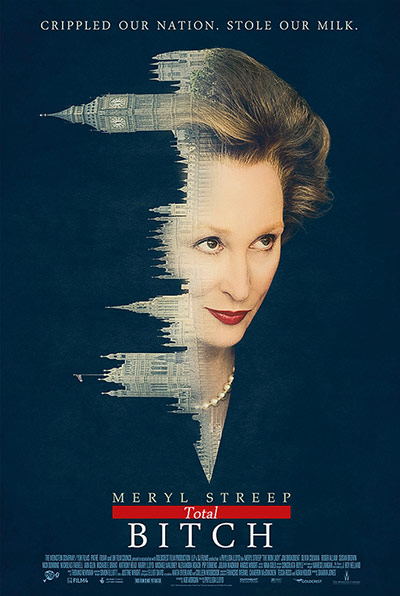
Performances such as these always impress me more than a portrayal of a real-life character. Not that Meryl Streep's performance as Margaret Thatcher wasn't amazing and powerful, it was.  But to bring to life a character so vividly from its foundations in the two-dimensional space of screenplay is something really worth speaking of.


Super 8


Yes it was a summer blockbuster.  Yes it was sentimental.  And YES it was a Spielberg pastiche if ever I saw one, but those are also the reasons I adored this film!  I can guarantee it will just bring you right back to when you were a kid, when you first started watching films, and were in awe of the very medium you were witnessing.  It is the Cinema Paradiso for the 21st century.  And yes, I am aware that was released merely twenty odd years ago....

The storyline was a little cliche, but a lot of films are cliched.  Super 8 just reawakened the soul!  I can barely describe this probably I just simply urge you to see this.  It gave children a voice beyond the wacky, cheeky, snide cartoonish renderings we have been seeing in the past decade and it was showed the parents and children can be vulnerable as well as brave.

It was the perfect anecdote to the summer/thesis blues.  I have not seen Hugo, so I guess I am being completely bias, but Hugo looks so extravagant, I am all for the blue collar underdog which is what you will find with JJ Abrahams pet project.  And Hugo was 3D. Eugh.

Where is the best original screenplay?  And WHERE is Elle Fanning's recognition?


The Guard

Maybe this movie didn't travel well.  It is extremely colloquial, and to weaker disposition, probably offensive.  Besides comedies rarely capture the Academy's attention as well as a good weepy.

But wait.  Melissa McCarthy, nominated.  Maybe there will be hope for Brendan!  Nooo.

Yeah I have a love hate relationship with Bridesmaids.  It was funny, sure.  I laughed, yes.  Those girls were funny, yes.  But I would not return to this film.  There's nothing there beyond a single viewing.  The only revolutionary thing about it is that is starred and was written by women.  Women writers have been around a long while and have been doing just fine for themselves.

The comedy was gross out comedy with girls.  Not terribly engaging, sorry to have to say.  It was funny in a kneejerk, slapstick kind of way but on repeated watch the lustre will fade.  McCarthy was brilliant because it was a unabashed physical and comedic performance, but it was like her antics was carrying the film.


Gleeson, on the other hand.

I know they say Ireland, the Irish, carries a beautiful duality of humour and melancholy and this is what Gerry encapsulates.  Just when you think he is one dimensional thuggish cop, you see him with his mother.  He is humanised.  He has woes, and faults, and he is real.

50/50

Yeah I've spoken about this before too so I promise I really won't bore you with this one, but let us just say it has been robbed everywhere by all accounts.  Bryce Dallas Howard for being a heartless bitch in the face of cancer.  Seth Rogen for being the obnoxious but lovable and caring friend.  Joseph Gordan Levitt, for enlivening a character who is suffering but who refuses to go down the route of caricature, where the bucket lists reside.  It is relatable, and endearing, and Angelica Huston remains a force to be reckoned with.

We Need to Talk About Kevin

Terrifying and challenging to watch. Yet refreshing to see a portrayal of a mother who find it hard to unearth the patience to rear or even love her son.  She's a woman tormented by unfulfilled aspirations, and barely hides the fact that she blames her son for her stilted life.  Then there is Kevin.  Damien incarnate.  Not so much evil as seeking his mother's love.  A film calling attention to the fact that we are all products of our environment.

Tilda Swinton and Ezra Miller have suffered a grave injustice.


------------------


I literally think my favourite thing about film in 2011 is when filmmakers and actors just went for a more pared down version of a film character, and situated you in a more realistic space and life.  Relatability is a very attractive thing in cinema.  Don't forget this Film of 2012.


Sunday, February 5, 2012

The Iron Bitch


Courtesy of The Guardian

Shopping the Film Stash #2 - Drive

Wikipedia, I know, not the most illustrious source, describes Nicolas Winding Refn's Drive as an arthouse action drama film.  I say it is more like the arthouse version of watching paint dry.

I was a latecomer to this film, which came out last September if I am not wrong.

It received huge plaudits at Cannes, and most critics fell over themselves with love for this, but at the time I had little acces/funds to see it in the cinema, so put it on the back burner.  I went retro the other day and rented it out at a local DVD shop.

Now it is not that I was disappointed with the movie, all the elements are there.  The cinematography is unbelievable, the performances are fantastic, bar may I saw the leads, the soundtrack is all kinds of amazing, the script is even decent, but combined it feels like it knows its good and it is the smug self-assurance that throws me off.

I just don't understand
Drive rested on its laurels as simply being a beautiful film. Even the smearing of violence lacked the capacity to be thought provoking.  Ryan Gosling's Kid, or Driver, was underdeveloped.  Though this mute hero has become something of a cult obsession now, some people like the way we are literally dropped randomly into his story, and he of all people gives no clue to who or why he is.  His motivation is undefined, thereby the romance between him and Irene seems completely implausible.

I am still undecided as to whether Gosling is overhyped in general or underused in this film....

Due to the lack of emotional depth, and therefore empathy, the characters are decidedly bland, and when characters are bland everything else is washed out and dull.

Albert Brooks, who got a lot of Awards buzz, but no cake, does light up the screen in a way.  It is fun to see him play against type as a thug.  He at least creates a ripple in another wise still ocean.

I am obviously missing something, but all I really took away from this was the killer soundtrack along with the honourable cinematic homages, (cheap pastiche?), to Taxi Driver and Bullit.

Driver will never be McQueen.

Monday, December 12, 2011

The Majesty of Melancholia


When the opening sequence of a film is reminiscent of a series of Surrealist painting you know you are set for both a aesthetically and intellectually challenging ride.


"I'm trudging through this grey wholly yarn.  It's clinging to my legs.  It's really heavy to drag along."


These days Lars von Trier is more infamous for his strange Nazi outburst at Cannes this past summer, which is a shame because that has overshadowed what he has achieved with Melancholia and will inevitably damage the film's chances at future award ceremonies, though it is one of the cinematic stand-outs of the year.

Both visually and thematically, von Trier re-imagines the genre of the apocolyptic film.  The all consuming nature of depression has been given the an allegory as a new planet dubbed Melancholia that is veering towards the earth, threatening existence.  Compared to previous work, von Trier describes Melancholia as the moment when a deer wanders in to listen to Jiminy Cricket at the end of a Disney Christmas special. It is just about as comforting as the cruel manner in which Disney films lure you into a false sense of security only to then reveal a horrible reality.  Melancholia deals with the horror of existence and fear of non-existence.

Part One focuses on the perspective of Justine (Kirsten Dunst) and sees her public facade crumble on the night of her wedding.  Those around her personify the underlined tension, which magnifies each time Justine disappears from the party.

We not only experience Justine's disintegration due to the overwhelming gravitas of the wedding reception organised by her sister Claire (Charlotte Gainsbourg) and her "filthy-rich" husband John (Kiefer Sutherland), but also the effect that Justine's illness and erratic manner have on the various members of her family.  Her guileless husband (Alexander Skarsgard), her oblivious father (the exquisite John Hurt), and a mother (Charlotte Rampling) who has no filter.

The film becomes disconcerting because at first Justine has a vivacious energy, then comes her mental descent, as the stifling ritual of the wedding etches away at her vulnerable psyche.  Though Claire sees Justine's behaviour as disrespectful, there is a sense that Justine is desperately trying to fight and repair herself before the evening is ruined.  When she goes AWOL to take a bath, this is a healing action, an effort to cleanse away what is perceived as mental impurities.

Melancholia will be appreciated because of its refusal to depict unnecessary hysterics to communicate Justine's experience.  The indeterminacy her mentality in contained in an authentic and relatable mode of communication.


Throughout Part One, though an underlying resentment does emerge between Justine and Claire, yet Claire still remains loyal to her sister through her suffering.  In Part Two this theme is extended, though in reverse perspective.

We witness Claire battles her own neuroses, and the threat of Melancholia's ever-nearing presence reassigns the position of the sisters.  Justine is acquiescent and calm of impending events while Claire is frantic.  Call it her maternal instinct in wishing to protect her son, but Claire is unable to accept the forthcoming doom.  Her pragmatism unravels in the face of looming threat.

Dunst and Gainsbourg achieve a great symbiosis on screen.  They flesh out these sisters, their relationship and history, meanwhile never detracting focus from one another.  


Those familiar with Trier's older work, and Dogme '95 will see glints of the original guidelines within Melancholia's makeup. The manifesto included rules that emphasis the use of handheld camera, the work to be filmed in colour, and no superficial action (aka murder).  While the aforementioned aspects are noticeable here, von Trier has largely abandoned the restricting methods of Dogme.  

 The most impressive element of Melancholia is that it is able to maintain engaging momentum throughout its meditative exposition.  As surreal and disjointed as proceedings are, the emotion is relatable as it never veers in to the overblown territory that Hollywood would have taken it. 


Saturday, November 26, 2011

The Big C on the Big Screen

Saw 50/50 in a matinee screening (why did I fail throughout my college years to attend these precious five euro matinee screenings?) earlier this week.


This is the first film in quite a while to deal with the implications of cancer so candidly.  Cancer's devastating potential is given more potent arsenal here when 27-year-old Adam (Joseph Gordan-Levitt) is diagnosed with a rare form of cancer affecting the spine.  The story follows him as he deals with treatment, an indifferent girlfriend (Bryce Dallas Howard), a boisterous friend, Kyle (Seth Rogen), who sees the romance-scoring potential in Adam's recent trauma, a distraught mother (Anjelica Huston), a Doogie Howser-like psychologist (Anna Kendrick), along with the stoner friends he makes in chemotherapy (Matt Frewer and Philip Baker Hall).

50/50 finds its strength by not immediately relenting to the stagnant habit of illustrating tragedy in the aftermath of diagnosis.  There is no sense that Adam has received a death sentence.  The events that unfold are even somewhat mundane.  This is the reality, in the face of illness, a majority of people will not endeavour to fulfill grandiose adventures.  Bucket-list sentimentality has been abandoned, instead communication is the main focus.  The story arc of this tale focuses on Adam's struggle with contending with the upheaval of living with illness.

I was expecting Rogen to contribute nothing more than a comic relief to the decidedly depressing material, yet he supplied a surprisingly nuanced performance, and the chemistry between himself and Gordan-Levitt genuinely captured the tension that infiltrates even the most secure of friendships, when conflicts arise and yet remain unacknowledged.  Adam is mired with medical and personal woes while Kyle attempts to steam-roll through and offer uplifting alternatives for his buddy, neglecting Adam's escalating depression.  The old adage of ignorance being bliss can only carry so far, and tensions eventually come to the fore.

Despite my own focus on the heavier material in the film, it is not without its hilarious, poignant, lonely, apprehensive, and euphoric moments.  Those are a lot of adjectives I have just named, simply because 50/50 has that rare quality of contemporary cinema in offering a truly human perspective on events.  There is something for everyone.  You WILL relate to this.  It is mixed and fucked up because this is life.

My favourite moment reminded me of the joys and tribulations of family.  Kendrick's psychologist Katherine meets Kyle and Adam's parents.  Huston's Diane skims over awkward chit-chat, and defending herself states, "I want you to know I smother him because I love him."  By unleashing her bad-ass Mama-Bear, Diane proves what I think the film articulates so well - and that is that even in vulnerability there is strength and resilience.  Every character displays the colours of experience, emotion, and even regret.  And that is what in the end makes it such a resonating work.